
Matahari
Matahari
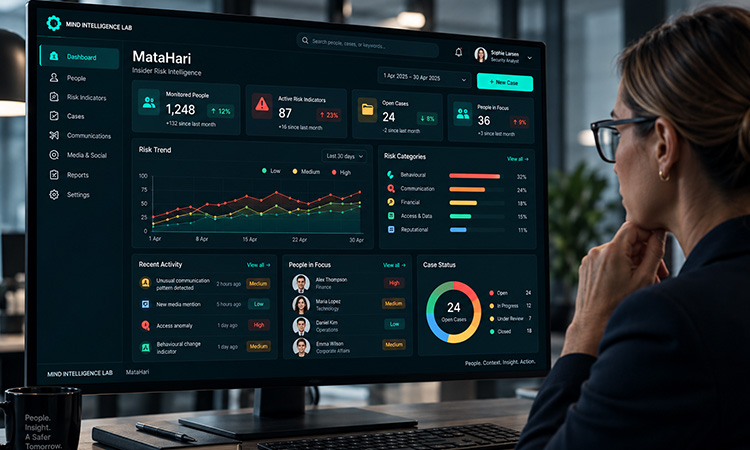
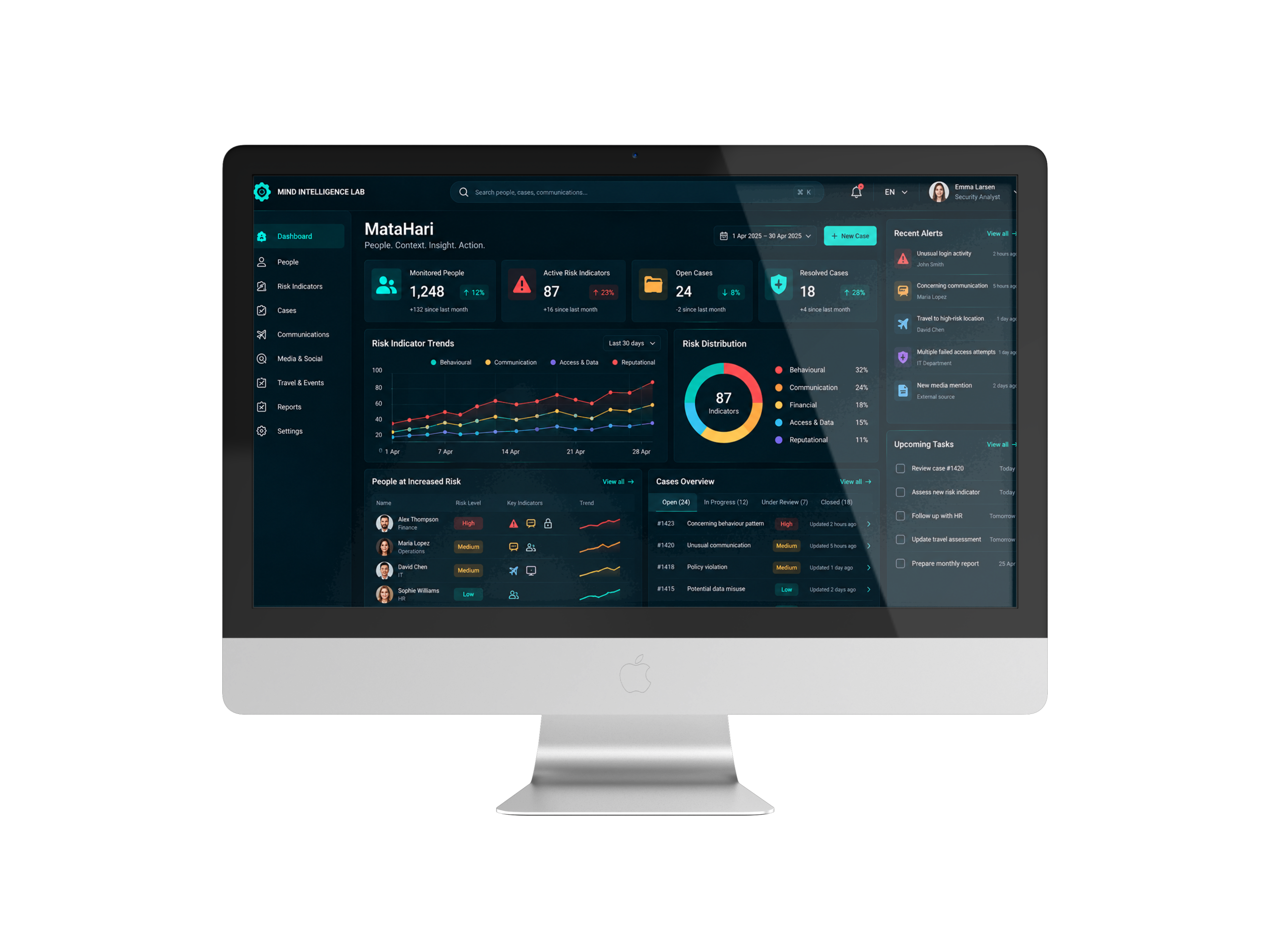
Prevent Insider Threats Proactively. One Human Risk Intelligence platform for the entire insider risk management lifecycle.
The Gap
The greatest security risk is no longer technology. It’s people.Organizations invest heavily in cybersecurity, background screening, and security awareness. Yet insider threats and human driven security incidents continue to rise.
Why Chose MataHari
From reactive security to proactive risk management. From manually searching for vulnerabilities to systematically identifying them before they become incidents.
- Identify Risk Before It Becomes An Incident: Identify threats, harassment and concerning behavior across relevant digital channels and communication.
- Prioritize Security Efforts Based On Risk: Turn human risk data into actionable insights and focus resources where they are needed most.
- Make Risk Assessment Objective: Replace subjective assessments with structured, evidence-based analysis for better security decisions
- Measure Change And Maintain Traceability: Track risk and change over time with continuous assessment, documentation and traceability
THE OUTCOME
Earlier detection. Better decisions. Stronger security. Our solutions help organizations move from reactive processes to structured, proactive human risk management.
Less time spent identifying human insider risks
More security capacity from the same team
Lower training cost to reach consistent judgement
Detect earlier
Identify human insider risks sooner.
Make better decisions
Turn human-risk information into structured, informed decisions.
Use resources efficiently
Reduce manual effort and focus security resources where they matter most.
Create safer organizations
Build a more consistent approach to identifying and managing human risk.
What Changes With MataHari?
From manual, reactive processes to structured, proactive human risk intelligence. The same challenges — a better way forward.
Before
Manual, reactive and resource-intensive.
Manual analysis insights
Time-consuming work to identify and assess vulnerabilities.
Subjective assessment
Based on individual experience and interpretation.
Reactive
Risks are addressed after an incident occurs.
Limited follow-up visibility
Resource-intensive to track changes and emerging risks over time.
After
Data-driven, proactive and efficient.
Data-driven
Structured analysis that identifies vulnerabilities directly.
Objective assessment
Standardized, evidence-based methodology for objective assessment.
Proactive
Risks are identified before they become incidents.
Continuous
Identify changes quickly and prioritize resources for ongoing security management.