
Dechefr
Dechefr
Detect and assess threats In written communication. Not every threat becomes an incident. The critical challenge is knowing which ones might.

The Challenge
The most critical signals can be hidden in words. Threatening communication can appear across social media, forums, emails and other digital channels. The challenge is knowing which messages represent frustration, anger or intent — and which may signal a potential path from words to action. Dechefr supports professional threat assessment by identifying and structuring relevant behavioral indicators, providing a consistent basis for evaluating the level and nature of risk.Organizations invest heavily in cybersecurity, background screening, and security awareness. Yet insider threats and human driven security incidents continue to rise.
Why Chose Dechefr
From manually interpreting threatening communication to systematically identifying indicators of a potential path from words to action
*Identify risk before it escalates
Dechefr detect behavioral indicators that may signal a potential progression from words
to action, enabling earlier attention and intervention.
* Accelerate professional threat assessment
Reduce the time and workload required to assess large volumes of written communication
and focus professional expertise where it matters most.
* Make risk assessment more consistent
Structure linguistic and behavioural indicators into a standardized assessment,
providing a consistent basis for professional judgement and decision-making.
* Strengthen decisions with evidence and traceability. Combine risk indicators, comparisons and structured reporting to provide an evidence-based foundation for decisions and a clear record of how the assessment was reached.Previously more featureand function-oriented; the proposal above is more WHY-focused
From a piece of writing to an evidence-based report
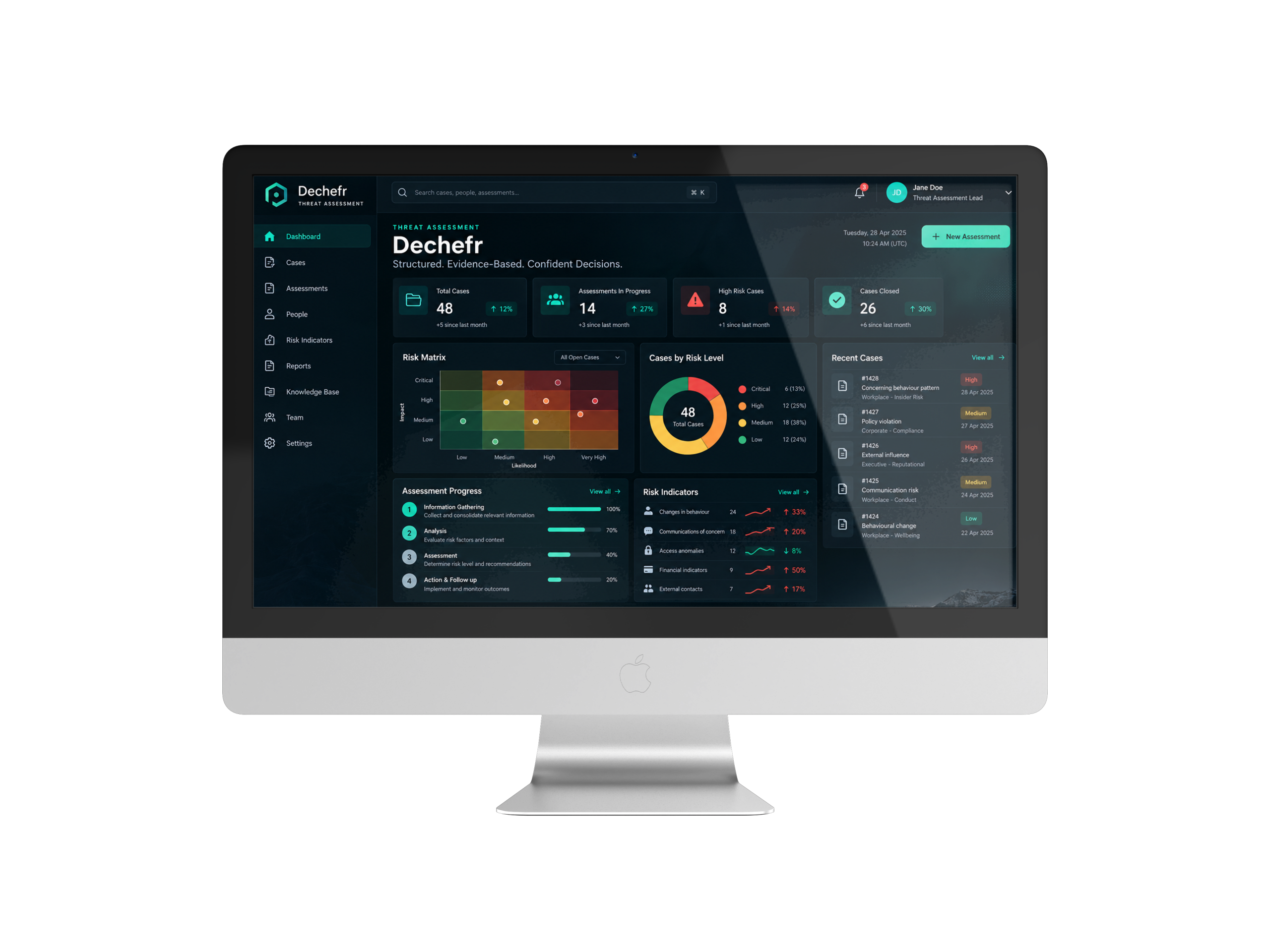
Dechefr turns a document or pasted text into a structured, transparent assessment in four steps.

Upload or paste the text
Submit a .doc, .docx, .txt, or .pdf file, or paste text directly. 300 or more words of English gives the most reliable result.
Review the risk level and indicators
A weighted overall risk level gives a fast triage signal across four levels, from no indicators present to several significant indicators of potentially violent behavior. Review each of the twelve indicators with an interactive assistant, and adjust any call based on your own judgment.

Run the similarity assessment
See how the case compares against a reference database of violent offenders’ communications and against your own case archive, showing which patterns recur and which details are particular to this case.

Generate an evidence-based report
A structured report documents every indicator, the sentences behind it, and the overall risk level, giving you a record of how the assessment was reached.
3 business impacts
Dechefr helps organisations work smarter, reduce risk and achieve measurable results. Real outcomes. A safer tomorrow.
Less time spent assessing whether threatening communication could lead to action
More efficient threat assessment and reporting
Lower training costs
What Changes With Dechefr?
The same information. A completely different outcome.
Before
Manual and inconsistent
Manual analysis assessment
Time-consuming review of threatening communication research-based indicators
Subjective assessment judgment
Assessment depends on individual experience and interpretation
Intent is difficult to assess
Manually interpret whether words may signal a path toward violence
After
Structured, objective and clear
Structured
Systematically assess communication against
Evidence-based
Standardized methodology supports consistent assessment
Risk becomes visible
Identify signals associated with potentially violent behavior